Duchess of Newcastle
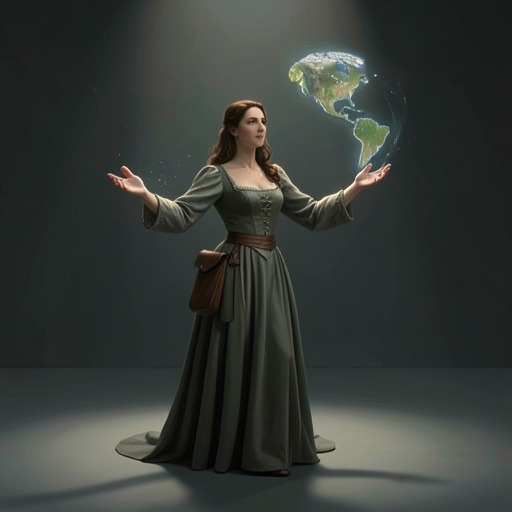
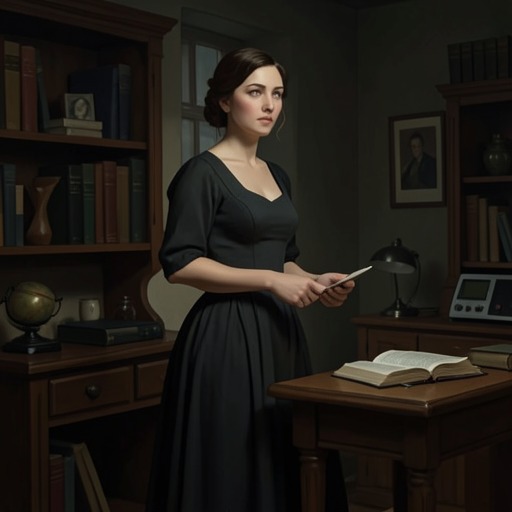
The Blazing WorldThe Duchess of Newcastle is both a character in The Blazing-World and the authorial figure whose soul is invited into its fiction. Chosen by the Empress to serve as a spiritual scribe, she instead becomes a trusted adviser and Platonick friend. Her counsel turns the proposed Cabbala away from claims to hidden authority and toward imaginative writing, while her appearances connect the novel’s speculative philosophy to its defense of women’s authorship and private world-making.
Identity and Literary Role
The Duchess enters the story not as a bodily traveler but as a soul summoned from her native world. When the Empress asks the Immaterial Spirits for a scribe to help compose a Cabbala, they recommend the Duchess as a plain and rational writer, whose work proceeds from sense and reason. The spirits also judge that celebrated male writers would be too committed to their own opinions to accept the task, and that they might scorn to write for a woman. The Duchess is presented as a more suitable collaborator precisely because she is a woman and because her writing is characterized as rational rather than as a claim to unmatched learning or eloquence.
The Empress chooses her in part because she expects the Emperor to have no reason for jealousy: the Duchess belongs to her own sex. The spirits complicate that assurance by warning that Platonick lovers can be intimate and insinuating. When the Duchess arrives, the Empress embraces and salutes her with a spiritual kiss. The scene establishes the affection that will shape their relationship, but also foregrounds the way the novel imagines female intellectual companionship as a serious bond.
The Cabbala and the Limits of Knowledge
The Duchess begins their collaboration by questioning the Empress’s proposed method. For a Jewish Cabbala, she suggests seeking the soul of Moses or of a learned Jewish sage, rather than relying on spirits whose knowledge is limited. She argues that created spirits cannot possess general or absolute knowledge, cannot know human thoughts, and cannot understand the Creator’s mysteries without divine inspiration. Her advice directly qualifies the Empress’s confidence in supernatural testimony: spiritual access is not the same as omniscience.
When the Empress considers a philosophical Cabbala, the Duchess says sense and reason can teach as much about nature as human beings can know, while adding numerical speculation would introduce confusion. A moral Cabbala is unnecessary, she argues, because its central teaching is to fear God and love one’s neighbour. A political Cabbala is likewise superfluous because government rests on reward and punishment. In each case, she tests the proposed system against what it can actually contribute, rather than treating elaborate interpretation as knowledge in itself.
Her religious counsel is similarly cautious. She recommends the general, literal sense of Scripture over private mystical interpretation, which she says risks error and is not necessary for salvation. If the Empress is determined to make a Cabbala, the Duchess proposes a poetical or romancical one, built from metaphors, allegories, and similitudes that can be interpreted imaginatively. The Empress accepts this advice, appoints her a Favourite, and keeps her in the Blazing-World for a time. The exchange makes the Duchess’s critical restraint a creative principle: she does not forbid invention, but redirects it from uncertain claims about divine secrets toward openly imaginative writing.
Friendship and Recurrent Visits
After the first period of service, the Empress allows the Duchess’s soul to return to her husband and kindred in her native world, on the condition that she visit again. The Empress promises to visit the Duchess in return. Their meetings produce what the narrator calls an intimate friendship, and the two women become Platonick Lovers. The Duchess’s continued appearances are therefore not incidental: she remains both a friend within the fiction and the figure through whom the work reflects on women’s intellectual and imaginative relations.
On a later visit, the Duchess tells the Empress that her melancholy comes from extreme ambition and that she desires to be a great Princess. Their conversation considers rank and sovereignty, but the Duchess’s ambition is not resolved by simply distinguishing titles. Elsewhere, when the Empress asks whether the Duchess might rule one of the many worlds, the Spirits point instead to a world she can create within herself. They argue that a material monarch cannot enjoy an entire territory at once and must bear the cares of government, whereas a person can shape and alter an inner world at will. The Duchess’s wish for worldly distinction is thus placed beside an alternative form of authorship and rule: imaginative creation.
Counsel on Government and the Work’s Frame
The Duchess also advises the Empress on the state of the Blazing-World. As the Empress prepares to leave, she confides that she changed the government after receiving absolute power and now fears that disputes among the different peoples may develop into rebellion. The Duchess recommends restoring the earlier arrangement: one sovereign, one religion, one law, and one language, so the world may function as a united family. She contrasts this order with the political divisions of her own world. Her intervention makes her a political counsellor as well as a literary collaborator, although the ideal of unity she endorses also entails the suppression of competing institutions and opinions.
The book’s framing matter enlarges the meaning of this fictional role. Addressing noble and worthy ladies, the author explains that the Description of a New World was first conceived as an appendix to her Observations upon Experimental Philosophy, then separated so that readers who disliked philosophical arguments might encounter its fancies independently. The work’s parts are described as romancical, philosophical, and fantastical. In the Epilogue, the author identifies herself as both Empress and author of a world, made from the rational parts of matter that are parts of her mind. She says that creating these worlds gave her more delight and glory than the conquests of Alexander or Caesar, and that she chose the figure of Honest Margaret Newcastle over those famous conquerors. The fictional Duchess’s soul and the author’s self-presentation together make authorship a kind of sovereignty: readers may imagine themselves as subjects of such a world, or create worlds of their own, while the Blazing-World remains under the rule of the Empress, her Platonick friend.